What Can an Enterprise Resource Planning (ERP) Solution Do for Your Business?
Why Businesses Are Turning to ERP Solutions
Modern organizations generate enormous amounts of data across finance, operations, sales, customer service, inventory, human resources, and project management. When that information is scattered across multiple systems, spreadsheets, or disconnected applications, it becomes difficult to make timely and informed decisions.
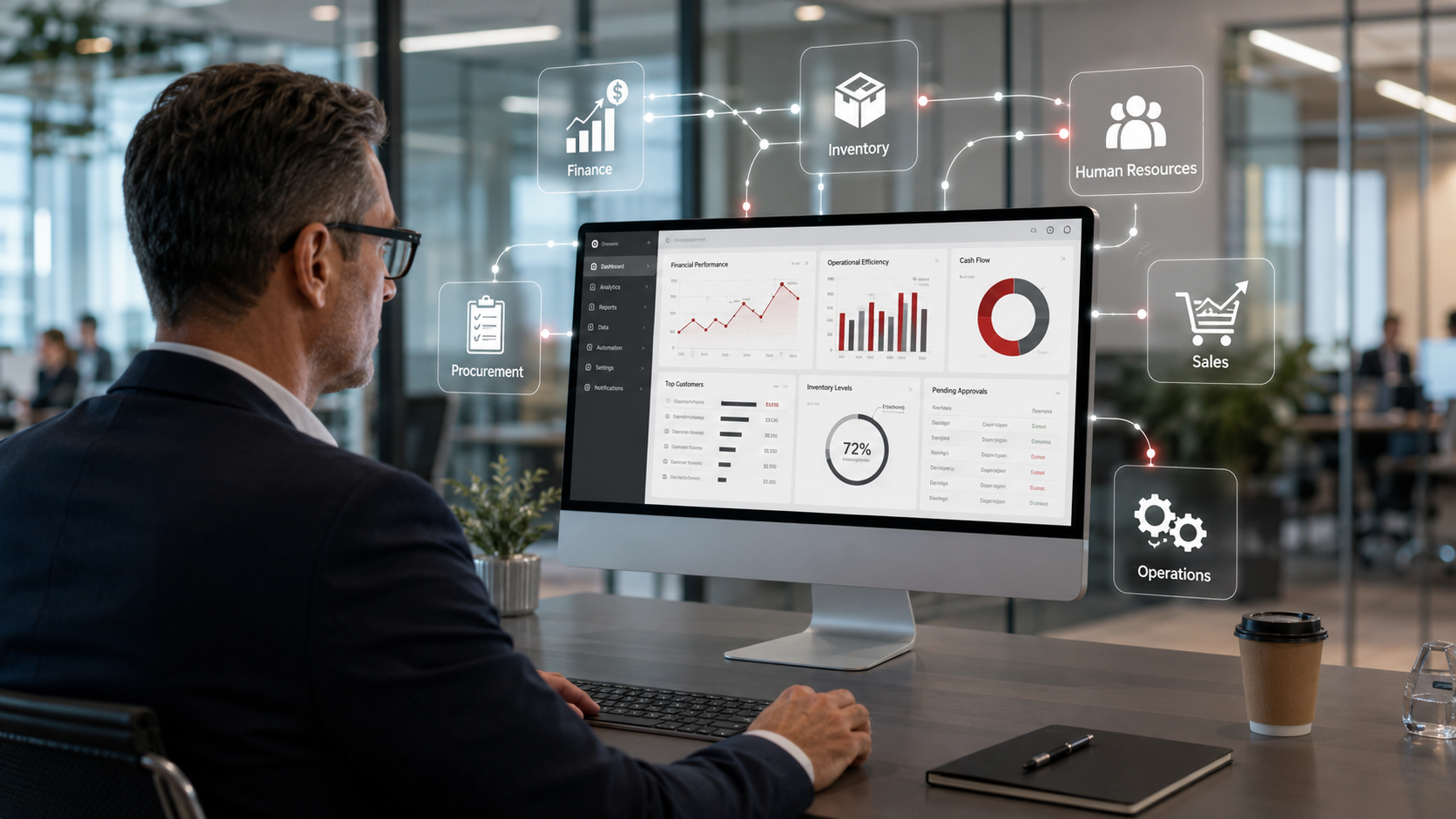
An Enterprise Resource Planning (ERP) solution brings those business functions together into a single, integrated platform. Rather than managing separate systems that rarely communicate with one another, an ERP provides a centralized source of truth that enables every department to work with accurate, real-time information.
Whether your organization is growing rapidly or simply looking to improve operational efficiency, an ERP system can transform how your business operates.
What Is an ERP System?
Enterprise Resource Planning (ERP) software integrates critical business processes into one centralized application. Instead of maintaining separate software for accounting, inventory, customer management, purchasing, or human resources, an ERP connects these functions through a shared database.
Common ERP modules include:
- Accounting and Finance
- Customer Relationship Management (CRM)
- Human Resources
- Inventory Management
- Procurement
- Project Management
- Sales and Marketing
- Supply Chain Management
Because every department works from the same information, organizations gain greater visibility, reduce duplicate data entry, and eliminate many of the inefficiencies associated with disconnected systems.
Improve Visibility Across Your Organization
One of the greatest advantages of an ERP solution is real-time visibility.
Executives, managers, and employees can quickly access the information they need without waiting for reports from multiple departments. Dashboards, analytics, and reporting tools provide immediate insight into business performance, allowing leaders to monitor operations as they happen.
With accurate data available in one location, organizations can:
- Monitor key performance indicators (KPIs)
- Identify operational bottlenecks
- Track financial performance
- Forecast future demand
- Make data-driven decisions with greater confidence
Automate Time-Consuming Business Processes
Many organizations continue to rely on manual processes that consume valuable time and increase the likelihood of human error.
An ERP system automates repetitive tasks such as:
- Billing and invoicing
- Financial reconciliation
- Inventory updates
- Purchase orders
- Payroll processing
- Sales order management
- Workflow approvals
Automation allows employees to focus on higher-value work while improving accuracy and consistency throughout the organization.
Eliminate Data Silos
When departments operate independently using separate software systems, valuable information often becomes trapped within those systems.
An ERP eliminates these data silos by creating a centralized database that everyone can access according to their role and permissions.
For example, when a sales representative enters a customer order, inventory levels, purchasing, accounting, and shipping can all be updated automatically without duplicate data entry.
This connected environment improves collaboration while reducing communication delays and costly mistakes.
Scale as Your Organization Grows
Business growth often exposes the limitations of legacy software.
As organizations expand, manual processes become increasingly difficult to manage, reporting becomes more complex, and disconnected systems struggle to keep pace with changing business needs.
Modern ERP platforms are designed to scale alongside your organization by supporting:
- Additional users
- New business units
- Multiple locations
- Expanded product lines
- Increased transaction volumes
- Custom business processes
An ERP becomes the foundation that supports sustainable long-term growth.
Gain Actionable Business Intelligence
An ERP does far more than store information.
Modern ERP solutions analyze operational data to help organizations identify trends, monitor performance, and anticipate future challenges.
Business intelligence capabilities allow decision-makers to:
- Compare performance across departments
- Forecast revenue and expenses
- Identify unusual activity
- Monitor inventory trends
- Improve resource allocation
- Reduce operational risk
Instead of reacting to problems after they occur, organizations can proactively respond to changing business conditions.
Improve Customer Satisfaction
Customers expect fast responses, accurate information, and reliable service.
An ERP enables employees to access customer records, order histories, inventory availability, and support information from a single platform, resulting in faster response times and improved customer experiences.
Better internal coordination often leads to:
- Faster order fulfillment
- Improved communication
- More accurate billing
- Better customer support
- Higher customer retention
Why Custom ERP Solutions Matter
While many commercial ERP platforms offer broad functionality, every organization has unique workflows, reporting requirements, approval processes, and operational challenges.
A custom ERP solution can be designed around the way your business operates rather than forcing your employees to adapt to rigid software limitations.
A tailored solution can integrate with existing applications, automate organization-specific workflows, provide customized dashboards, and scale as your business evolves.
At SingTone Technologies, we specialize in developing secure, scalable, and fully customized business applications that align with each client's operational goals while supporting future growth.
Is It Time to Invest in an ERP?
If your organization experiences any of the following challenges, an ERP solution may provide immediate value:
- Employees manually entering the same data into multiple systems
- Difficulty generating accurate reports
- Limited visibility into operations
- Inefficient business processes
- Communication gaps between departments
- Growing operational complexity
- Legacy software limiting productivity
An ERP is not simply another software application—it is a strategic investment that helps organizations improve efficiency, reduce costs, and make better business decisions.
Final Thoughts
Successful organizations depend on accurate information, streamlined processes, and the ability to respond quickly to changing business conditions. An Enterprise Resource Planning solution provides the technology foundation needed to connect departments, automate workflows, and deliver actionable insights across the entire organization.
Whether your business is looking to modernize legacy systems, improve operational efficiency, or prepare for future growth, the right ERP solution can become a powerful competitive advantage.