IT Modernization Is Not About Buying New Technology -- It Is About Building a Better Organization
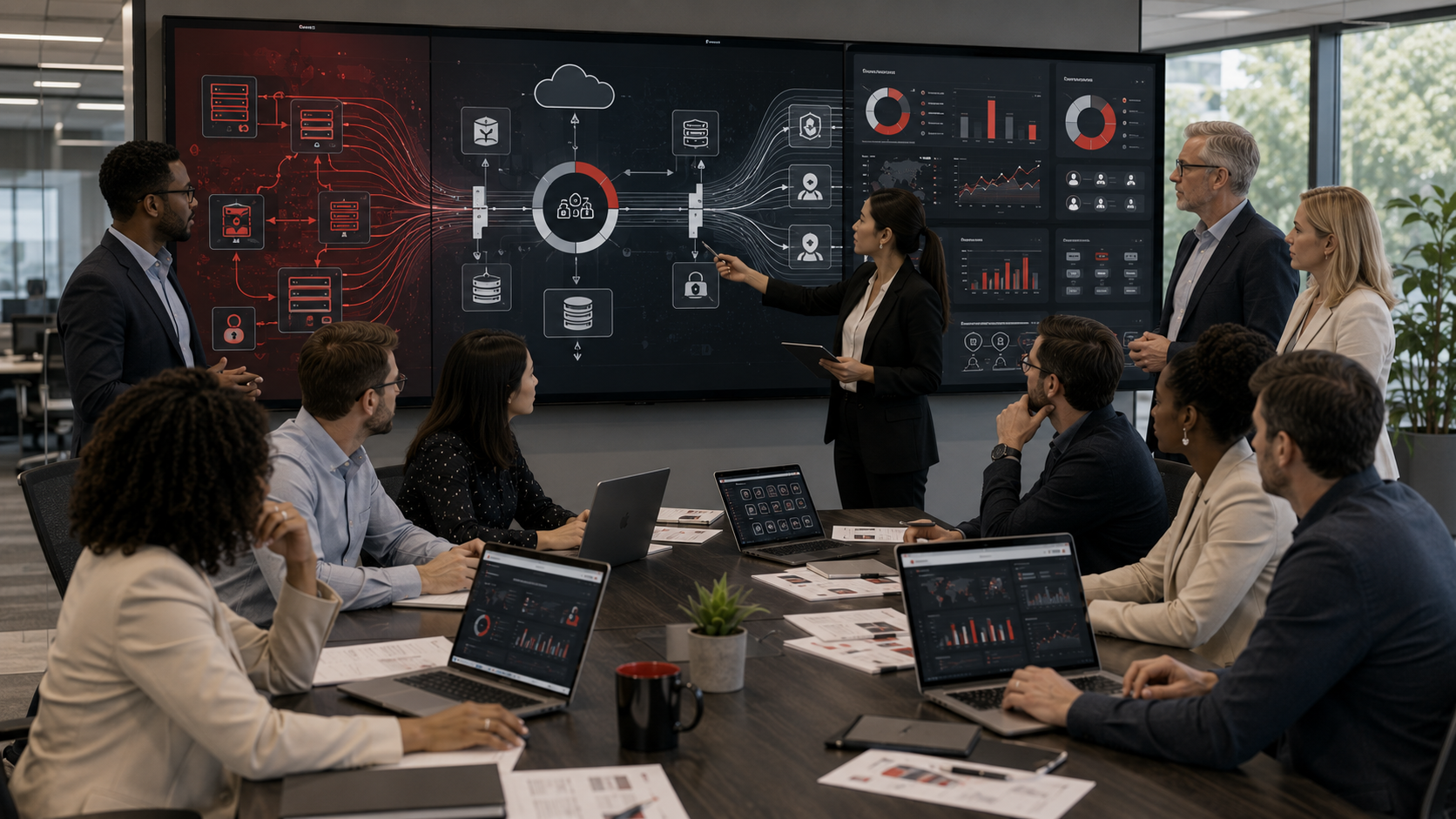
Modernization Is an Organizational Strategy
Technology changes rapidly, but many organizations still depend on aging infrastructure, disconnected applications, manual workflows, and legacy systems that were not designed for current operational demands.
Replacing outdated technology may be necessary, but purchasing new software or moving applications to the cloud does not automatically create a modern organization.
Successful IT modernization aligns technology with business goals, workforce needs, operational processes, data requirements, cybersecurity priorities, and governance. The objective is not to deploy more tools. It is to improve how the organization operates, makes decisions, serves customers, and accomplishes its mission.
Modernization should produce measurable organizational value rather than a collection of disconnected technology projects.
The Hidden Costs of Legacy Technology
Legacy systems often remain in place because they continue performing their original functions. However, the fact that a system still works does not mean it continues serving the organization effectively.
The true cost of older technology may include:
- Increasing cybersecurity exposure
- Higher maintenance and licensing expenses
- Limited integration with newer systems
- Repetitive manual data entry
- Duplicate or inconsistent information
- Dependence on unsupported software
- Difficulty finding qualified support personnel
- Reduced employee productivity
- Slower customer service
- Limited reporting and analytics
- Greater risk of outages and data loss
These problems may develop gradually and become accepted as normal operating conditions.
Employees create spreadsheets to compensate for system limitations. Departments purchase separate applications without coordinating data. Staff members repeat the same work across multiple platforms. Reports require manual consolidation before leadership can review them.
Over time, these workarounds increase technical debt, operational risk, and organizational complexity.
Modernization Begins with Business Outcomes
Technology projects frequently struggle because organizations select products before clearly defining the problems that need to be solved.
A modernization initiative should begin with questions such as:
- Which business processes create the greatest delays?
- Which systems present the highest operational or cybersecurity risk?
- Where is information duplicated or difficult to access?
- Which customer or employee experiences need improvement?
- Which services must become more reliable or scalable?
- What capabilities shall the organization need in the future?
- Which investments shall provide the greatest long-term value?
Answering these questions helps leadership prioritize modernization according to mission and business needs.
A successful modernization strategy connects every technology investment to an expected outcome, such as faster service delivery, stronger security, better data quality, lower operating costs, or improved customer satisfaction.
Assess the Current Environment
Organizations should understand the existing technology environment before determining what should change.
A comprehensive assessment may examine:
- Applications
- Databases
- Networks
- Cloud services
- Hardware
- Cybersecurity controls
- Business processes
- Data flows
- Vendor relationships
- Software licenses
- Support agreements
- Workforce skills
- Continuity and recovery capabilities
The assessment should identify technical dependencies and operational risks.
For example, a legacy application may appear replaceable until the organization discovers that several departments depend on its database, reports, integrations, and undocumented workflows.
Understanding those relationships helps prevent modernization efforts from disrupting critical services.
Modernization Is More Than Cloud Migration
Cloud services can provide flexibility, scalability, geographic availability, and access to modern capabilities. However, moving an inefficient or poorly designed application to the cloud does not resolve its underlying problems.
A rushed migration may preserve:
- Outdated workflows
- Weak access controls
- Poor data quality
- Unnecessary complexity
- Inefficient application architecture
- Excessive costs
- Inadequate monitoring
Cloud adoption should be part of a larger modernization strategy.
Organizations should determine whether each system should be:
- Retained
- Reconfigured
- Rehosted
- Refactored
- Replaced
- Retired
The right decision depends on business value, technical condition, security risk, integration requirements, cost, and future needs.
Improve Business Processes Before Automating Them
Automating an inefficient process can make the inefficiency operate faster.
Before implementing new technology, organizations should examine how work currently moves through departments and systems.
Process analysis may identify:
- Unnecessary approval steps
- Duplicate data entry
- Manual handoffs
- Repeated reviews
- Unclear ownership
- Bottlenecks
- Inconsistent procedures
- Opportunities for self-service
Modernization creates an opportunity to simplify processes before they are digitized.
A redesigned workflow can reduce delays, improve accountability, and make the resulting technology easier for employees and customers to use.
Modernize Applications Around User Needs
Application modernization may involve improving an existing system, rebuilding selected components, replacing the platform, or developing a custom solution.
The decision should reflect the needs of the people who use the system.
Modern applications should support:
- Accessible interfaces
- Mobile-friendly experiences
- Clear navigation
- Reliable performance
- Secure authentication
- Role-based access
- Integration with other systems
- Meaningful reporting
- Scalable architecture
- Easier maintenance
Modernization should remove barriers rather than introduce new complexity.
Employees and customers should not need extensive training to complete common tasks that could be made intuitive through better design.
Data Modernization Supports Better Decisions
Many organizations possess valuable information but struggle to use it effectively because data is distributed across disconnected systems, stored in inconsistent formats, or maintained through manual processes.
Data modernization may include:
- Database upgrades
- Data cleansing
- Data integration
- Standardized definitions
- Data governance
- Reporting dashboards
- Master data management
- Archiving and retention
- Access controls
- Quality monitoring
Reliable data enables leadership to understand performance, identify trends, allocate resources, and make timely decisions.
Artificial intelligence and advanced analytics also depend on well-governed, accurate, and accessible data. Organizations should strengthen the data foundation before expecting emerging technologies to produce dependable results.
Cybersecurity Must Be Built into Modernization
Cybersecurity should be incorporated throughout the modernization lifecycle.
Adding security after deployment can create delays, increase costs, and leave critical weaknesses unresolved.
Security-focused modernization may include:
- Identity and access management
- Multi-factor authentication
- Least-privilege access
- Network segmentation
- Secure development practices
- Vulnerability management
- Encryption
- Logging and monitoring
- Backup protection
- Incident response planning
- Business continuity
- Disaster recovery
Each modernization decision should consider how the technology shall be secured, monitored, maintained, and recovered.
Security is not a separate phase. It is a design requirement.
Governance Keeps Modernization Aligned
Modernization initiatives often involve multiple departments, contractors, systems, budgets, and competing priorities.
Without effective governance, projects can experience:
- Scope expansion
- Conflicting requirements
- Budget overruns
- Delayed decisions
- Inconsistent technology choices
- Weak documentation
- Poor vendor coordination
- Limited accountability
Strong governance establishes:
- Executive sponsorship
- Clear objectives
- Defined roles
- Decision authority
- Risk and issue management
- Change control
- Quality assurance
- Performance reporting
- Stakeholder communication
- Documentation requirements
Governance helps ensure that modernization remains connected to organizational priorities from planning through deployment and ongoing operations.
Enterprise Architecture Reduces Fragmentation
Departments may adopt technology independently to address immediate needs. Over time, this can create duplicated applications, inconsistent data, incompatible platforms, and unnecessary licensing costs.
Enterprise architecture provides a structured view of how business capabilities, applications, data, security, and infrastructure should work together.
Architecture planning helps organizations:
- Reduce duplicated systems
- Improve integration
- Standardize platforms
- Strengthen security
- Plan technology lifecycles
- Manage technical debt
- Support future growth
The objective is not to force every department into the same application. It is to make intentional technology decisions based on shared standards and organizational priorities.
People Determine Whether Modernization Succeeds
Technology alone does not transform an organization.
Employees must understand why changes are occurring, how the new environment shall affect their work, and what support shall be available.
Effective change management includes:
- Early stakeholder engagement
- Clear communication
- Practical training
- Leadership support
- User testing
- Updated procedures
- Feedback channels
- Post-deployment assistance
Employees who are excluded from planning may resist a new system or create workarounds that reduce its value.
Employees who contribute to requirements and testing are more likely to understand the benefits and support adoption.
Documentation Protects the Investment
Modernization projects generate decisions, configurations, interfaces, procedures, and technical knowledge that must be preserved.
Documentation may include:
- Architecture diagrams
- Configuration records
- Data definitions
- Interface specifications
- Security procedures
- Test results
- Operating instructions
- Training materials
- Recovery procedures
- Change histories
Without documentation, organizations may become dependent on individual employees or contractors who understand the system.
Strong documentation supports maintenance, audits, training, troubleshooting, continuity, and future modernization.
Quality Assurance Reduces Implementation Risk
Modernization projects should include quality assurance throughout planning, development, testing, deployment, and operations.
Quality activities may examine:
- Requirements
- Design decisions
- Application functionality
- Data migration
- Security controls
- Performance
- Accessibility
- Integrations
- Documentation
- User acceptance
Testing should reflect realistic operational scenarios rather than isolated technical functions.
For example, a new application may pass individual feature tests but still fail if a complete customer transaction cannot be completed across connected systems.
Quality assurance helps identify those issues before they affect users.
Business Continuity Must Be Part of the Plan
Modernization can temporarily increase operational risk as systems are migrated, integrated, or replaced.
Organizations should plan for:
- Data backup
- Rollback procedures
- Parallel operations
- System outages
- Vendor delays
- Failed migrations
- User-support surges
- Security incidents
- Disaster recovery
Critical services should have documented recovery priorities and tested restoration procedures.
A modernization project should improve resilience rather than create a new single point of failure.
Artificial Intelligence Readiness Requires a Strong Foundation
Organizations are increasingly interested in artificial intelligence, automation, and advanced analytics.
However, AI initiatives depend on the quality of the surrounding technology environment.
AI readiness may require:
- Reliable data
- Clear governance
- Secure infrastructure
- Defined business use cases
- Privacy protections
- Human oversight
- Integration capabilities
- Quality assurance
- Performance measurement
Modernization can create the foundation required for responsible AI adoption.
Organizations should avoid implementing AI simply because it is popular. The technology should address a defined need and produce measurable value.
Measure Outcomes, Not Technology Purchases
The success of modernization should not be measured by the number of applications replaced, cloud services purchased, or tools deployed.
Meaningful performance indicators may include:
- Reduced operating costs
- Faster service delivery
- Improved system availability
- Fewer manual steps
- Better cybersecurity posture
- Higher employee productivity
- Improved customer satisfaction
- Better data quality
- Faster reporting
- Reduced technical debt
- Shorter recovery times
Measures should be established before implementation so leadership can determine whether the investment produced the expected value.
Modernization Is an Ongoing Discipline
IT modernization is not a one-time initiative with a final completion date.
Technology, customer expectations, cybersecurity threats, regulations, and organizational needs shall continue changing.
A sustainable modernization program includes:
- Technology lifecycle management
- Periodic assessments
- Continuous process improvement
- Architecture reviews
- Security monitoring
- Performance measurement
- Workforce development
- Vendor management
- Planned replacement cycles
Organizations that treat modernization as a continuing discipline are better prepared to adapt without repeatedly facing large, disruptive replacement projects.
How SingTone Technologies Can Help
SingTone Technologies helps government agencies and commercial organizations modernize technology with a focus on mission outcomes, operational efficiency, security, quality, and long-term maintainability.
Our capabilities include:
- Application development
- Business process improvement
- Cloud solutions
- Configuration management
- Cybersecurity governance
- Database administration
- Digital transformation
- IT project management
- Quality assurance
- Technical documentation
- Technology assessments
- Workflow automation
We shall work with stakeholders to evaluate current environments, identify priorities, establish governance, manage implementation, and measure results.
Our approach emphasizes modernization with purpose rather than technology adoption for its own sake.
Build a Better Organization Through Modernization
Successful IT modernization is not defined by newer hardware, additional software, or a cloud migration.
It is defined by stronger operations, better decisions, improved security, reliable data, efficient processes, engaged employees, and more effective services.
Organizations that connect technology investments with strategy, governance, people, and measurable outcomes can reduce risk while creating a foundation for future growth.
SingTone Technologies shall help organizations modernize thoughtfully, strengthen operational performance, and prepare for future challenges with confidence.