Visual Barriers
Low contrast, small text, unclear layouts, missing alternatives, and visual-only instructions can make content difficult to understand.
SingTone Technologies helps businesses create websites, applications, documents, and digital communications that are easier for everyone to access, understand, navigate, and use. We combine accessibility assessments, inclusive design, remediation, testing, governance, training, and ongoing monitoring to improve customer experiences while reducing legal, operational, and reputational risk.

Business Challenges
Accessibility barriers can prevent customers, employees, applicants, partners, and other users from completing important tasks. Organizations also face changing content, complex technology, third-party platforms, document backlogs, limited internal expertise, and increasing expectations for inclusive digital service.
Low contrast, small text, unclear layouts, missing alternatives, and visual-only instructions can make content difficult to understand.
Interactive controls, menus, forms, dialogs, and workflows may be difficult or impossible to operate without a mouse.
Missing labels, incorrect structure, poor semantics, and improperly implemented controls can prevent assistive technologies from interpreting content.
PDFs, presentations, spreadsheets, forms, and downloadable materials may lack structure, reading order, labels, or alternative text.
Small touch targets, orientation restrictions, reflow problems, and responsive design issues can create barriers on mobile devices.
Modern websites and applications rely on dynamic components, integrations, frameworks, and third-party tools that may introduce accessibility defects.
New pages, documents, products, campaigns, and software updates can reintroduce barriers after initial remediation.
Accessibility complaints, demand letters, lawsuits, failed procurements, and negative customer experiences can create avoidable business exposure.
What We Deliver
SingTone supports organizations across the accessibility lifecycle—from initial assessment and remediation planning through design, development, testing, training, governance, documentation, and ongoing monitoring.
Evaluate websites, applications, portals, digital content, and user workflows to identify accessibility barriers and improvement priorities.
Assess digital experiences against applicable Web Content Accessibility Guidelines and document findings by success criterion and severity.
Perform human-centered testing that goes beyond automated scans to evaluate real interactions, context, usability, and assistive-technology behavior.
Use automated tools to identify detectable accessibility issues across pages, templates, components, and changing content.
Validate that navigation, forms, menus, dialogs, controls, and workflows can be completed using only a keyboard.
Evaluate digital content and controls with assistive technologies to verify structure, labels, instructions, status messages, and interaction behavior.
Review color, contrast, typography, spacing, zoom, reflow, focus indicators, and visual communication for readability and usability.
Evaluate responsive interfaces, touch interactions, device orientation, zoom, reflow, and mobile assistive-technology support.
Assess, remediate, and validate documents so users can navigate, understand, and interact with downloadable content.
Create and revise digital content using clear structure, meaningful links, accessible tables, alternative text, and understandable language.
Design websites, applications, forms, components, and customer journeys with accessibility incorporated from the beginning.
Build or update websites and applications using semantic markup, accessible components, proper labels, structured content, and resilient interactions.
Correct accessibility defects in websites, applications, templates, themes, components, content, and digital documents.
Improve forms, applications, checkout processes, registration, scheduling, payments, and other essential digital transactions.
Improve access to audio, video, animation, webinars, and other multimedia through alternatives and accessible controls.
Evaluate vendor products, embedded tools, plugins, widgets, payment systems, scheduling platforms, and integrations for accessibility risk.
Establish organizational policies, standards, roles, review processes, procurement guidance, and accountability for sustainable accessibility.
Help organizations evaluate technology purchases, software vendors, websites, and digital products for accessibility before implementation.
Evaluate digital experiences from the perspective of real users to improve navigation, efficiency, comprehension, and task completion.
Provide executive dashboards, technical reports, remediation priorities, trend analysis, and measurable progress reporting.
Train developers, designers, content authors, marketers, administrators, leadership, and support teams on accessibility best practices.
Support continuous improvement through recurring assessments, automated monitoring, regression testing, reporting, and advisory services.
Our Approach
We combine accessibility expertise, usability, quality assurance, business analysis, design, development, testing, governance, and training to help organizations create digital experiences that work for everyone.
Understand business objectives, users, technologies, legal considerations, accessibility goals, digital assets, and organizational priorities.
Evaluate websites, applications, documents, multimedia, workflows, and third-party technologies using automated and manual accessibility testing.
Categorize issues based on severity, business impact, user experience, implementation complexity, and organizational priorities.
Correct accessibility barriers within code, content, templates, components, documents, multimedia, and digital workflows.
Confirm that remediation efforts resolve issues through manual testing, assistive technology validation, usability testing, and quality reviews.
Provide practical training, documentation, governance guidance, and best practices that help teams create accessible content independently.
Continuously evaluate websites, applications, documents, and digital content to identify newly introduced accessibility barriers.
Refine accessibility practices, update standards, strengthen governance, and incorporate accessibility into ongoing business operations.
Why SingTone
SingTone combines accessibility expertise with website development, application development, quality assurance, UX design, cybersecurity, business analysis, digital marketing, content strategy, and ISO 9001 quality management.
Accessible digital services enable more customers, employees, applicants, and partners to successfully complete important tasks.
Accessibility improvements often make websites and applications easier for everyone to navigate and understand.
Accessibility reviews and remediation help reduce exposure associated with complaints, litigation, and procurement requirements.
Better usability and accessibility contribute to improved customer confidence, engagement, and retention.
Accessible design practices frequently improve responsive layouts, navigation, readability, and mobile usability.
Well-structured content, semantic markup, alternative text, and accessible design practices can also support SEO efforts.
Governance, training, standards, and continuous monitoring reduce the likelihood of recurring accessibility issues.
Accessibility encourages cleaner code, better architecture, improved documentation, and stronger quality assurance practices.
Recurring assessments and monitoring help organizations maintain accessibility as content, technology, and business needs evolve.
Our certified quality management system supports documented processes, testing, corrective action, independent verification, and continual improvement.
Related Experience
Representative engagements demonstrating accessibility assessments, website modernization, application development, document accessibility, quality assurance, usability, remediation, governance, and ongoing support.

SingTone designed, developed, hosts, and maintains the Mitsui Gardens International Preschool website while creating custom enrollment and student management solutions that automated administrative processes, improved operational efficiency, and enhanced the parent experience.

SingTone designed and developed a professional website for Wall 2 Wall Painting LLC and provided managed hosting and ongoing technical support to maintain a secure, reliable, and high-performing online presence.

SingTone designed and developed a custom WordPress website for Top Stream Exterior and continues to provide managed hosting, technical support, and advanced search engine optimization (SEO) services that strengthen the company's online presence and generate qualified leads.
Related Insights
Explore insights related to accessibility, inclusive design, usability, website modernization, digital customer experience, document accessibility, WCAG, quality assurance, and continuous improvement.
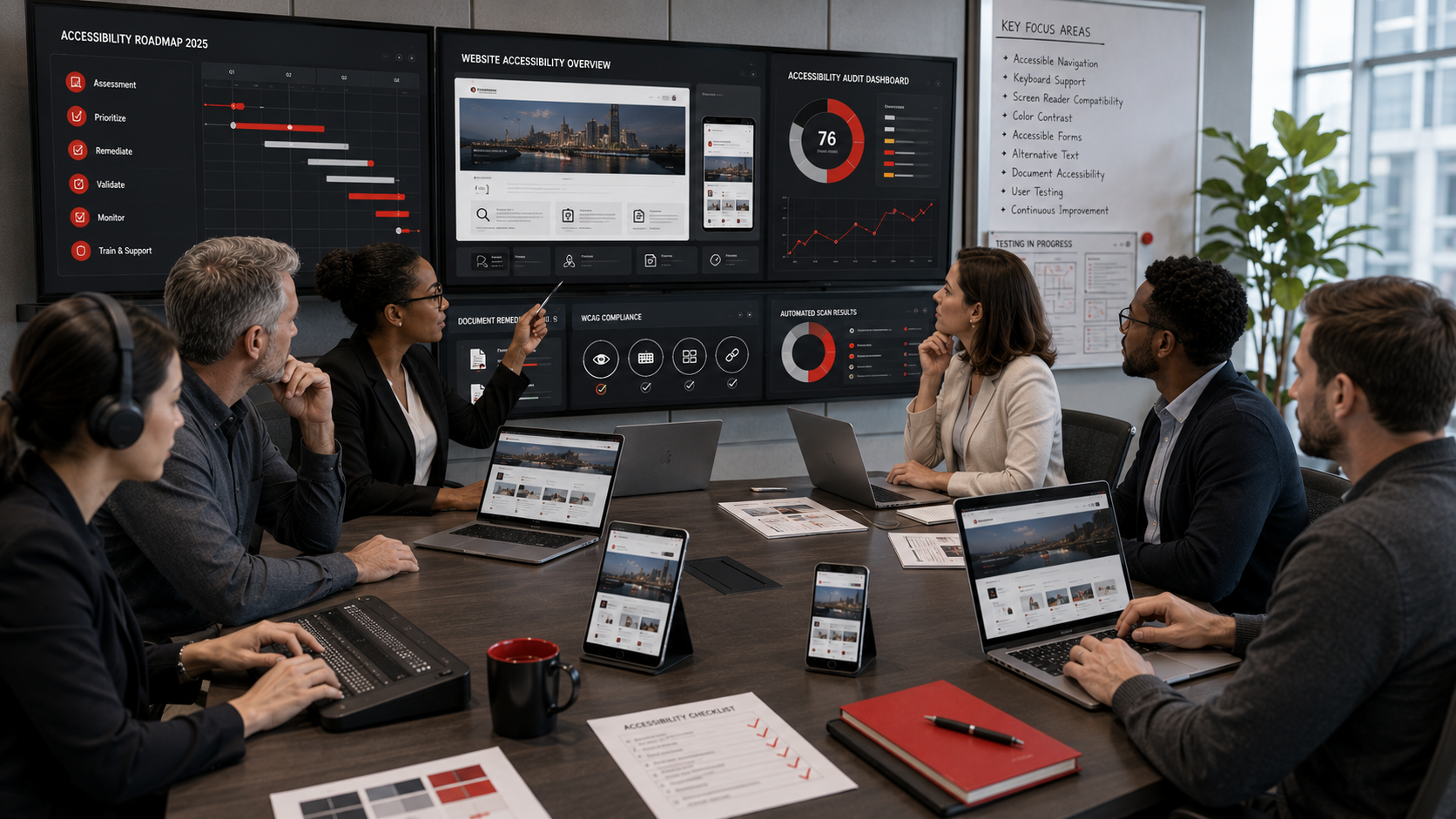
Public entities should use 2025 to assess websites, remediate accessibility barriers, train employees, review vendors, and prepare for upcoming ADA Title II compliance deadlines.

Shared, VPS, and cloud hosting offer different levels of cost, control, performance, and scalability. Understanding those differences can help you choose the right environment for your website.

SingTone Technologies uses accessible design, development, testing, remediation, and supporting technologies such as AccessiBe to help organizations create more inclusive digital experiences.
Frequently Asked Questions
Common questions regarding accessibility assessments, WCAG, testing, remediation, inclusive design, document accessibility, governance, and ongoing monitoring.
Connect with SingTone regarding accessibility assessments, WCAG reviews, remediation, inclusive design, document accessibility, usability testing, governance, training, or ongoing accessibility monitoring.